
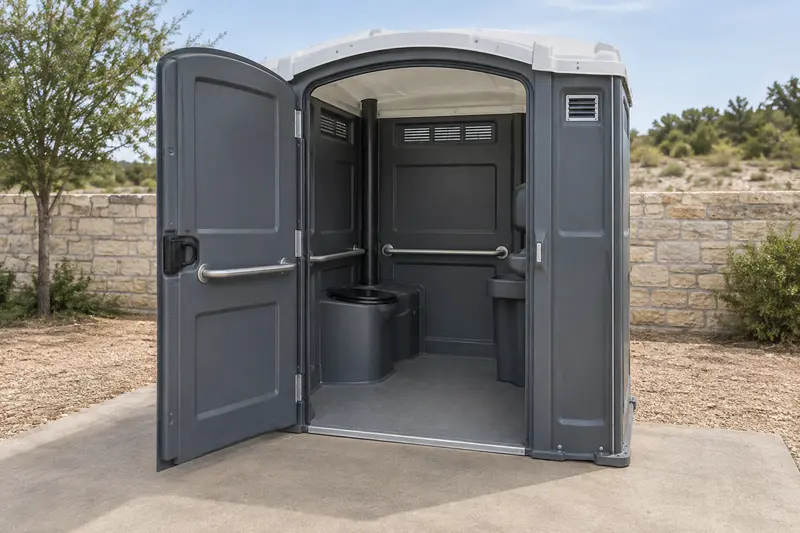
Review the journey to the door
Accessible restroom planning includes more than ordering a wider cabin. Follow the route people will take from parking or the activity area and identify thresholds, soft ground, narrow gates and changes in level. Describe those conditions before selecting a position. Ask for the actual equipment details rather than relying on a photograph or a general accessible label.
Keep the surrounding space usable
The entrance area must remain available after chairs, vehicles and supplies arrive. Assign responsibility for that space to the organiser or site contact, and include washing that users can reach. The equipment choice and the whole-site accessibility plan need to work together; a rental unit by itself does not establish that an event satisfies every applicable requirement.
Model details and an unobstructed accessible route
Compare the actual accessible model
An accessible portable toilet should be selected for the intended users and installation, not simply because a photograph shows a wider door. Ask for the proposed model’s entry, interior and maneuvering information. Wheelchair-friendly and ADA-compliant are not interchangeable descriptions for every product. Request the applicable specifications rather than relying on a category name.
Maintain the arrangement during use
Do not let queues, parked vehicles, bins or temporary storage obstruct the entrance. Discuss reachable washing facilities and the service approach alongside the toilet. Report a blocked or damaged arrangement promptly and ask for a safe remedy; do not improvise ramps or alterations to the rental equipment.